



Paint Correction Before Coatings or PPF
Why Paint Correction Comes Before Coatings or Film

FSDAVCFEBFEVSDDVFSD

FSDAVCFEBFEVSDDVFSD

FSDAVCFEBFEVSDDVFSD
What Paint Correction Actually Does to Your Finish
Paint correction is the process of removing surface defects from a vehicle's clear coat before any protective layer goes on top. Swirl marks, light scratches, oxidation, water spots, and haze are all defects that live in the clear coat. If those defects are present when a coating or film is applied, they get locked in place rather than removed. The result is a protected finish that still looks dull, cloudy, or scratched beneath the surface.
Most vehicles, even newer ones, arrive at the shop with some level of paint imperfection. Wash-induced swirls, dealer lot scratches, and sun-related oxidation are common on vehicles of all ages. Paint correction addresses those issues at the source, leaving a clean, smooth surface that allows coatings and films to perform the way they are designed to. Skipping this step means protecting a flawed finish rather than a restored one.
What Paint Correction Actually Does to Your Finish
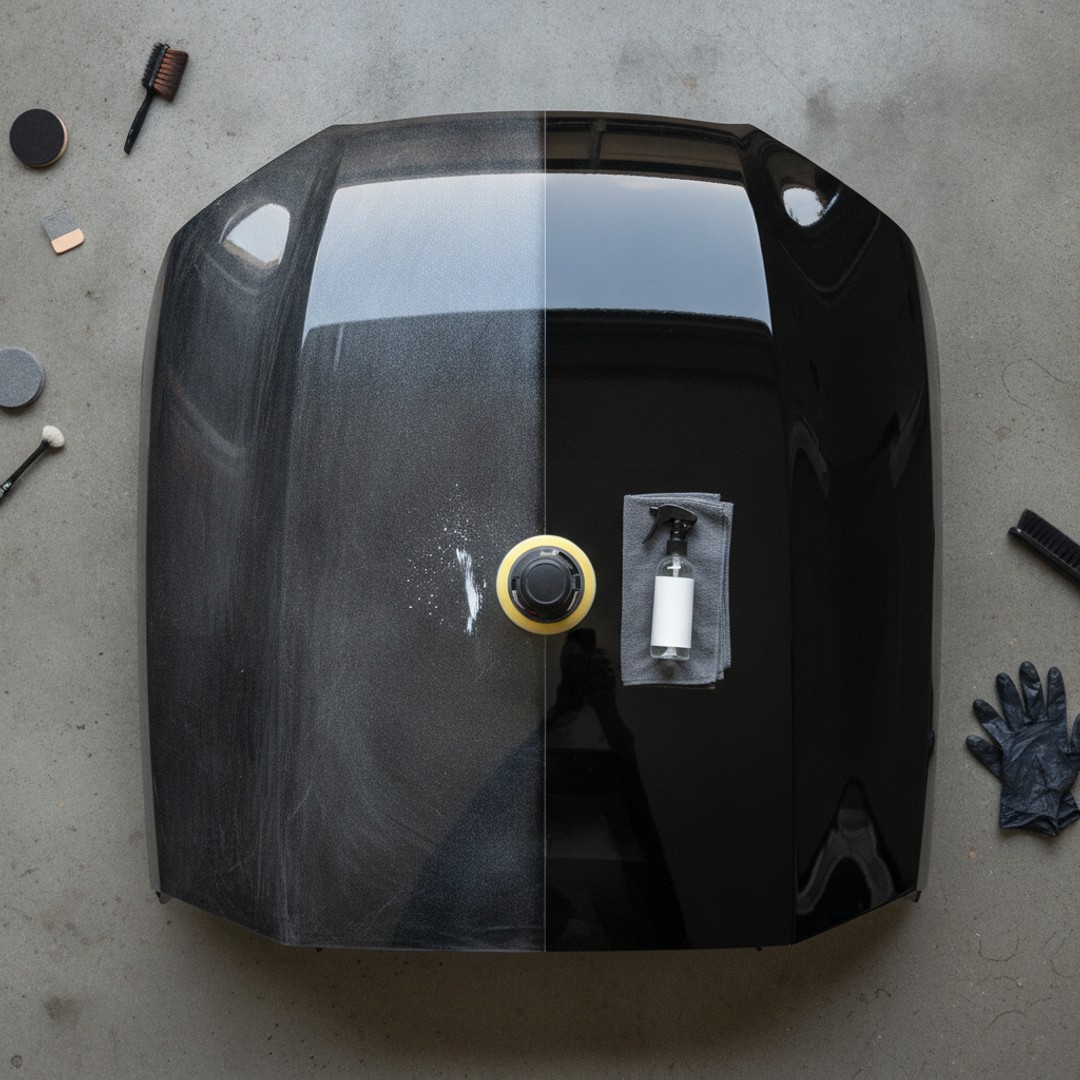
Paint correction is the process of removing surface defects from a vehicle's clear coat before any protective layer goes on top. Swirl marks, light scratches, oxidation, water spots, and haze are all defects that live in the clear coat. If those defects are present when a coating or film is applied, they get locked in place rather than removed. The result is a protected finish that still looks dull, cloudy, or scratched beneath the surface.
Most vehicles, even newer ones, arrive at the shop with some level of paint imperfection. Wash-induced swirls, dealer lot scratches, and sun-related oxidation are common on vehicles of all ages. Paint correction addresses those issues at the source, leaving a clean, smooth surface that allows coatings and films to perform the way they are designed to. Skipping this step means protecting a flawed finish rather than a restored one.
How Defects Affect Coatings and Film Adhesion
Ceramic coatings bond directly to the clear coat, forming a rigid layer that holds tightly to whatever surface sits underneath it. If swirl marks, haze, or oxidation are present on the paint when the coating goes on, those imperfections become part of what the coating bonds to. Once cured, the coating hardens over those defects and locks them in permanently. No amount of washing, maintenance, or reapplication will remove what is underneath a fully cured ceramic coating.
This is why paint correction must happen before coating installation, not after. The goal of a ceramic coating is to protect a great finish and make it easier to maintain. When the paint surface is cloudy or scratched going in, the coating delivers gloss over a compromised base. The result often looks acceptable at first glance but falls short under direct sunlight or close inspection.
Paint correction before coating means the ceramic layer bonds to clean, smooth clear coat. That combination produces the deep gloss and clarity that ceramic coatings are known for. It also means the protected surface looks as good as it performs. Customers who skip correction often notice the difference only after the coating has cured and the defects become more obvious in certain lighting.
Reading the Paint Before Correction Begins
Paint protection film presents a similar issue. PPF is a clear, flexible film that lays directly against the paint surface. When it is applied to paint that already has scratches, swirl marks, or oxidation, those defects show through the film. In some lighting conditions, they become more visible under film than they were on bare paint.
Film is optically clear and slightly magnifying in certain lights. That means anything sitting in the clear coat underneath will be noticeable once the film goes on. A freshly corrected paint surface, by contrast, looks clean and smooth beneath the film and allows the clarity of the material to work in the vehicle's favor.
For partial or full-front PPF packages, paint correction in the covered areas is particularly important because those panels are the most visible and get the most attention during inspection. Getting the paint right before film installation means the finished result looks intentional, clean, and professionally done from every angle.
Reading the Paint Before Correction Begins
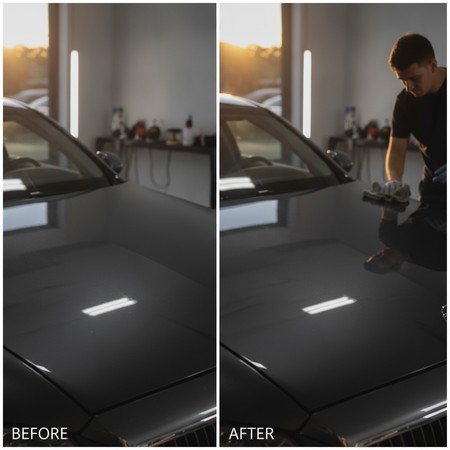
Paint protection film presents a similar issue. PPF is a clear, flexible film that lays directly against the paint surface. When it is applied to paint that already has scratches, swirl marks, or oxidation, those defects show through the film. In some lighting conditions, they become more visible under film than they were on bare paint.
Film is optically clear and slightly magnifying in certain lights. That means anything sitting in the clear coat underneath will be noticeable once the film goes on. A freshly corrected paint surface, by contrast, looks clean and smooth beneath the film and allows the clarity of the material to work in the vehicle's favor.
For partial or full-front PPF packages, paint correction in the covered areas is particularly important because those panels are the most visible and get the most attention during inspection. Getting the paint right before film installation means the finished result looks intentional, clean, and professionally done from every angle.
Some customers ask whether paint correction is always necessary before protection. The honest answer is that it depends on the condition of the paint. Vehicles with very new or well-maintained paint may only need a light polish or a thorough decontamination wash before coating or film goes on. Others with years of wash-induced marring, sun exposure, or neglect will benefit significantly from a more involved correction process.
The correction process is typically completed in stages. A technician inspects the paint under controlled lighting, identifies the depth and type of defects present, and selects the appropriate polishing steps needed to address them. Compound cuts, polish steps, and finishing passes all play a role depending on what the paint requires. The goal is to reach the cleanest, smoothest surface possible before any protective product is applied, so the investment in coating or film starts from the best possible foundation.
Correction Levels and What Each Stage Addresses
When paint correction is done well, the results are immediately visible before any coating or film touches the vehicle. Gloss improves, clarity comes back, and the paint looks noticeably cleaner under inspection lighting. That visual improvement reflects real changes at the surface level, where the clear coat has been smoothed and the defects that were scattering light have been addressed.
Once the surface is corrected and a ceramic coating or PPF goes on top, the combination produces results that neither product delivers alone. The coating or film does not have to compensate for a rough or defective surface. It simply protects and maintains what correction has already restored. That is the correct order of operations, and it makes a measurable difference in the final appearance.
Customers who invest in paint correction before protection often notice that their vehicle looks better after the process than it did when it was new. That is not unusual. Many vehicles leave factories with minor paint defects already present. Correction and protection together address both the history of the paint and its future, giving the finish a clean starting point and a durable layer that keeps it looking that way.
Preparing the Surface After Correction Is Complete
After correction, the paint goes through a decontamination and prep stage before any product is applied. Polishing oils, dust, and any residue from the correction process must be fully removed. An IPA wipe-down is typically used to strip the surface clean and reveal the true corrected finish.
At this stage, the paint should look as good as it ever will, free of swirls, haze, and surface contamination. This is the condition the protective product needs to bond to or adhere over. Any shortcuts in the prep stage after correction can reduce how well the coating bonds or how cleanly the film sits on the panel.
Paint correction and post-correction prep work together as a single process. One does not mean much without the other. Taking both steps seriously is what produces a finish that looks genuinely clean under the protective layer rather than just glossy on the surface.
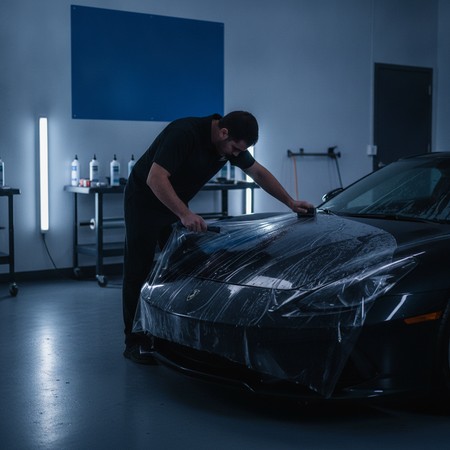
Choosing whether to include paint correction before protection starts with an honest assessment of the vehicle's paint. Our team inspects the surface under dedicated lighting before recommending any correction steps, so the process is based on what the paint actually needs rather than a fixed package applied to every vehicle.
If a vehicle comes in with minimal surface defects and recent paint care, a lighter prep step may be all that is needed before coating or film. If the paint shows years of swirl marks, oxidation, or other defects, a more thorough correction process will produce a result worth protecting. Either way, the prep stage directly shapes the quality of the finished product. Taking the time to get the paint right before any protective product goes on is one of the most important decisions in the entire protection process, and it is one that shows up clearly in the final result.
Get the Most From Your Vehicle Protection Investment
Paint correction is not a luxury add-on reserved for exotic vehicles or show cars. It is a practical step that improves the outcome of every protection service built on top of it. Whether a customer is investing in a full ceramic coating, a partial PPF package, or a combination of both, the paint surface underneath determines how good the finished product looks and how long the results hold up.
Understanding this connection helps customers make better decisions about their protection investment. A ceramic coating applied to corrected paint outperforms the same coating applied to defect-heavy paint in both appearance and long-term satisfaction. The coating itself does not change, but the surface it bonds to changes everything about the result. The same logic applies to paint protection film applied over properly prepared paint.
If you are considering any paint protection service and are unsure about the condition of your vehicle's paint, reaching out to our team is a good first step. We inspect the paint before making any recommendations. That process helps match the right prep and protection plan to your specific vehicle so the finished result meets what you were expecting when you decided to invest in protection.
Paint Protection Lab
Paint Protection Film & Ceramic Coatings
STAY CURRENT ON VEHICLE PROTECTION
Subscribe to get the latest articles on paint protection, coatings, tint, and detailing delivered to your inbox.
STAY CURRENT ON VEHICLE PROTECTION
Subscribe to get the latest articles on paint protection, coatings, tint, and detailing delivered to your inbox.
Contact Info
Service Hours
Social Media
Mon-Fri: 9:00AM - 6:00PM EST
Saturday: 10:00AM - 3:00PM EST
Sunday: 10:00AM - 3:00PM EST



Licensed & Insured
Connect With Our Socials
Contact Info
Service Hours
Mon-Fri: 9:00AM - 6:00PM EST
Saturday: 10:00AM - 3:00PM EST
Sunday: 10:00AM - 3:00PM EST
Social Media
Licensed & Insured
©2026 Paint Protection Lab
Powered by: Customers Plus
Powered by: Customers Plus
Powered by: Customers Plus